
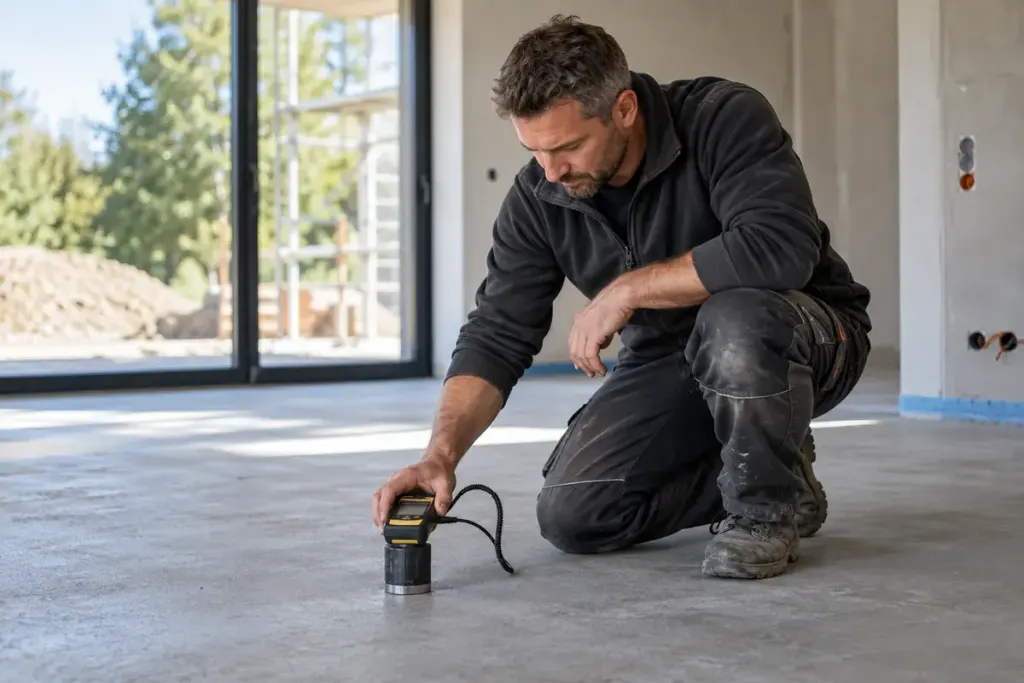
The screed is pale, firm underfoot and no longer looks wet. It is tempting to treat that appearance as permission to install the new floor. Yet being ready for foot traffic and being ready to receive a floor covering are different milestones.
Residual moisture, the screed product, its thickness, site conditions and the proposed covering all matter. A generic “days per millimetre” estimate should not replace the product instructions and the installer’s assessment.
Ask for the system, not just a drying date
Record which screed was installed, when it was laid and what preparation is required for the chosen finish. Include the adhesive and any underfloor heating in that discussion. The floor covering may have requirements that are not captured by saying the screed itself is cured.
For a product-specific example, ARDEX’s FLOWPLUS aftercare guidance calls for assessment of residual moisture before subsequent finishes and gives limits tied to particular conditions and coverings. Those values belong to that system; they should not be copied across to an unidentified screed.
Get a meaningful moisture record
Ask the flooring contractor which test method the relevant manufacturers require, where testing will be done and how the result will be recorded. A handheld device reading without its method, location or interpretation may not answer whether installation can proceed.
A useful handover note links the measurement to the actual project: room, test location, date, screed identification, proposed covering and the contractor’s decision. If the result is unsuitable, agree what happens next and when reassessment will occur. Do not respond by adding an unapproved sealer or forcing heat into the room.
Consider an installation booked for Monday because the surface looked dry on Friday. Moving the appointment after a proper test may be inconvenient, but covering unsuitable material can create a much larger disruption. Build a testing decision into the schedule before furniture deliveries depend on a fixed finishing date.
The practical question is specific: has this floor assembly met the conditions for this covering? Appearance is one observation, not the acceptance test.