
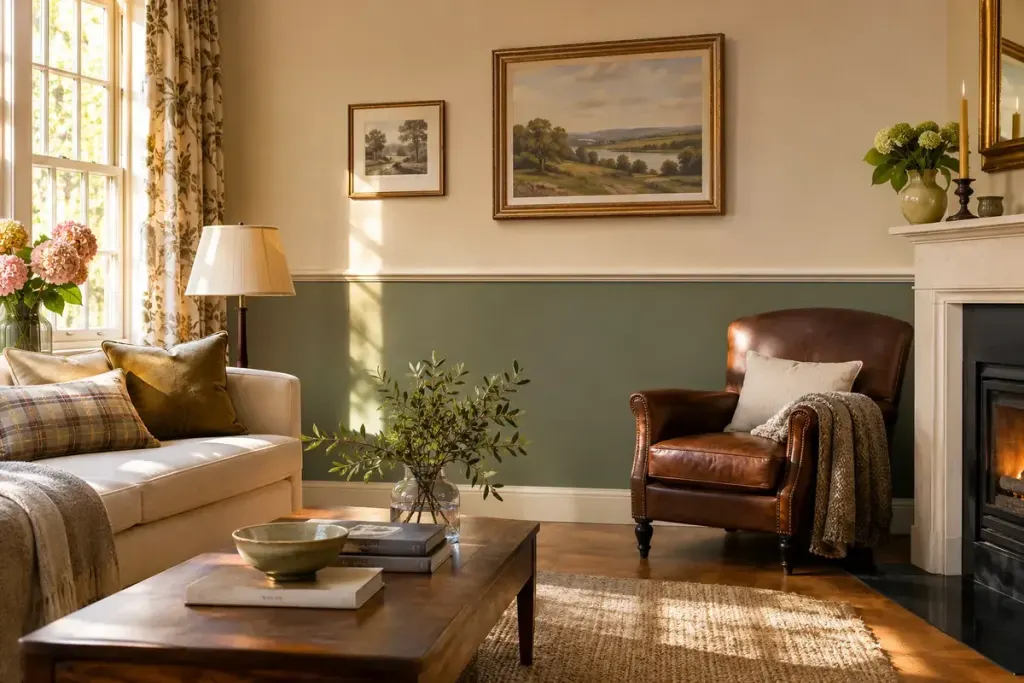
A dado rail creates a horizontal break on a wall. It can separate paint colours, finish the top of panelling or give a wallpapered upper section a clear boundary. Its effect depends on the room around it, not only on a measurement taken from an inspiration photograph.
The joinery guidance from Make Bespoke on wall rails notes that there is no single prescribed height for this decorative detail. That is a reason to plan the relationship to the room, rather than a reason to choose the height without testing it.
Map the interruptions first
Look at door architraves, window sills, radiators, sockets and existing mouldings. Consider where the rail will stop, meet another element or continue into an adjoining space. A line that looks elegant on the longest wall may end awkwardly beside a small doorway.
Mark a proposed line with low-tack tape suitable for the surface. View it from the entrance, from the main seating position and from the hallway beyond. Hold a sample of the actual moulding against the line; a wide profile changes the effect compared with a thin strip of tape.
If furniture protection is part of the purpose, compare the rail with the actual chair backs. A decorative rail at a fashionable height may never meet the part of the chair that touches the wall.
Test the colour boundary too
Place paint or wallpaper samples above and below the proposed line. Check them in daylight and evening lighting. The rail can be painted to merge with one section or read as a separate detail; neither treatment is compulsory.
Once the arrangement works, record the height and termination details before ordering materials. For uneven older rooms, ask the installer how they will establish a visually consistent line. A considered mock-up is cheaper to change than a completed run of fixed moulding.