
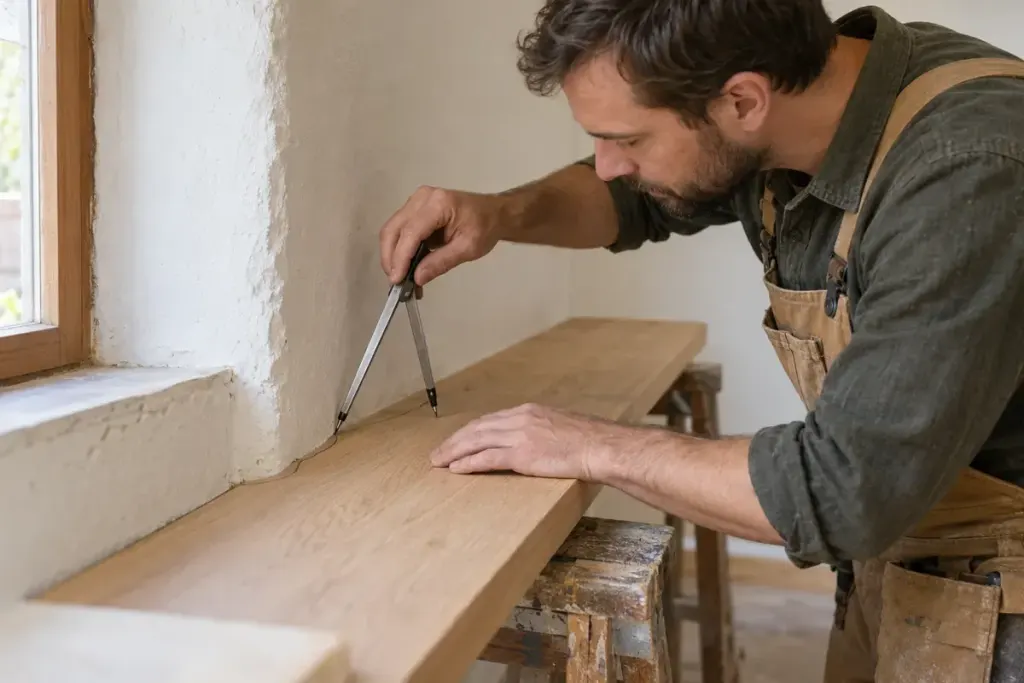
A shelf cut perfectly square can still leave an uneven gap against an old wall. The problem may be the wall’s profile rather than the accuracy of the saw. Scribing transfers that profile onto the edge of the piece so the two can fit more closely.
In its bookcase-building guide, This Old House demonstrates marking a wall’s irregularities with a compass before trimming the fitted part. The important preparation is establishing where the piece must finally sit.
Position first, mark second
Check the intended level, alignment and support arrangement. Hold or temporarily support the piece securely in the position used for marking. If it tilts or slides during the trace, the line will describe a different fit.
Set the scribing tool to bridge the relevant gap and keep its orientation consistent as it follows the wall. Mark the waste side clearly. Practise on scrap if you have not used the tool before; a line is easier to erase than an over-cut edge is to restore.
Remove the piece before cutting or sanding, and use suitable support, dust control and protective equipment. Choose the tool and method for the material. Laminated boards, solid timber and fragile veneers can behave differently at an edge.
Work gradually towards the mark and test the fit again. Do not force a piece against the wall to disguise a remaining high point. A careful second pass is usually more informative than removing a large amount all at once.
Before making the finished piece, a cardboard or thin-board template can help with an unusually shaped corner. Label its orientation and reference points so that turning it over does not reverse the profile.
A close cosmetic fit is separate from a safe fixing. Brackets, anchors and the wall construction must suit the expected load. Check for concealed services before drilling, and follow the fixing manufacturer’s requirements.
Leave any movement allowance required by the material and design. The aim is a considered fit, not a shelf wedged so tightly that seasonal movement or installation pressure creates another problem. A small, intentional finishing detail often looks better than a forced join.