
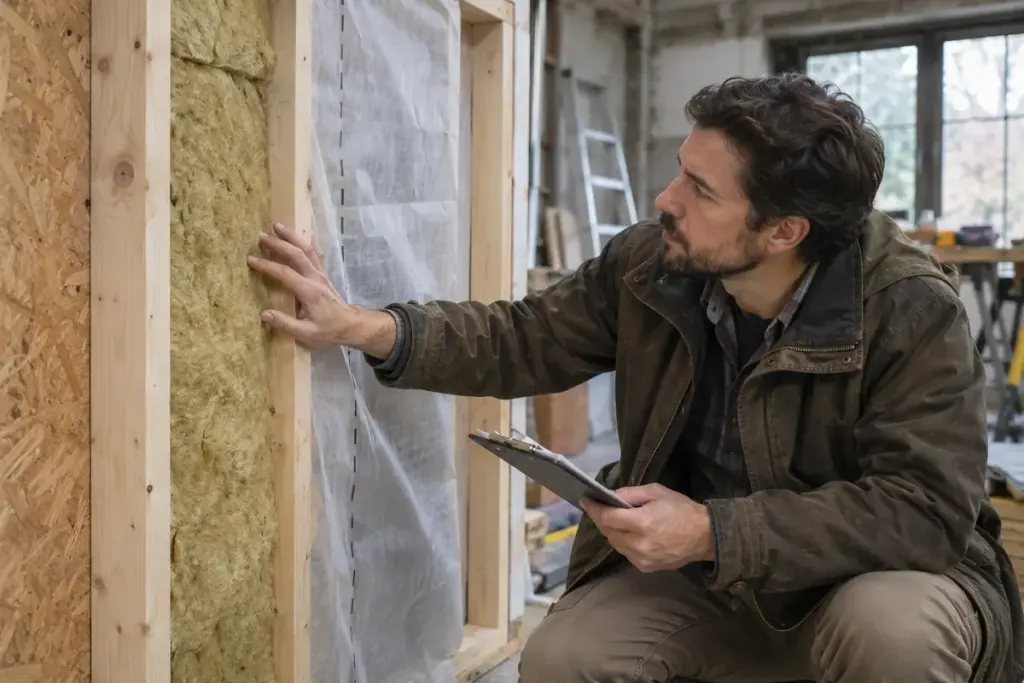
A sheet described as a vapour barrier can look like a simple finishing step: fit it behind the lining and close the wall. Yet a layer that suits one building assembly can interfere with drying in another. The question is where the particular wall can safely control and release moisture.
The US Department of Energy’s explanation of air barriers and vapour barriers distinguishes air movement from water-vapour diffusion. A material may serve more than one purpose, but an air-control layer and a vapour-control layer are not interchangeable ideas.
Likewise, a rain-control layer deals with water arriving from outside. Calling every membrane “waterproofing” can hide the function the wall actually needs at each position.
Ask for the wall, not just the product name
Before buying a roll of membrane, ask the designer or suitably qualified building professional to describe the complete assembly from outside to inside. That includes existing finishes, insulation, sheathing, cavities, internal lining and any materials already restricting drying.
Useful questions for the renovation discussion include:
- What climate and indoor conditions is this wall being designed for?
- Which layer controls air leakage, and how will joints and penetrations remain continuous?
- What is the intended drying direction, including during seasonal changes?
- Does an existing coating or membrane already limit vapour movement?
- How will the proposed materials meet local building requirements and their manufacturers’ installation details?
The Department of Energy’s climate-specific building guidance is useful background for understanding why one universal membrane position is not a sound rule. It is not a substitute for designing the actual renovation in its own jurisdiction.
For example, adding an impermeable layer during an interior refurbishment may change an older wall’s ability to dry. Whether that is acceptable cannot be decided from the membrane’s colour or the fact that a neighbour used it.
Resolve leaks, damp materials and unclear details before the lining conceals them. Photograph agreed junctions and keep the product and design information with the renovation records. Those records will help a later repair distinguish an intentional assembly from an unexplained sheet behind the plasterboard.