
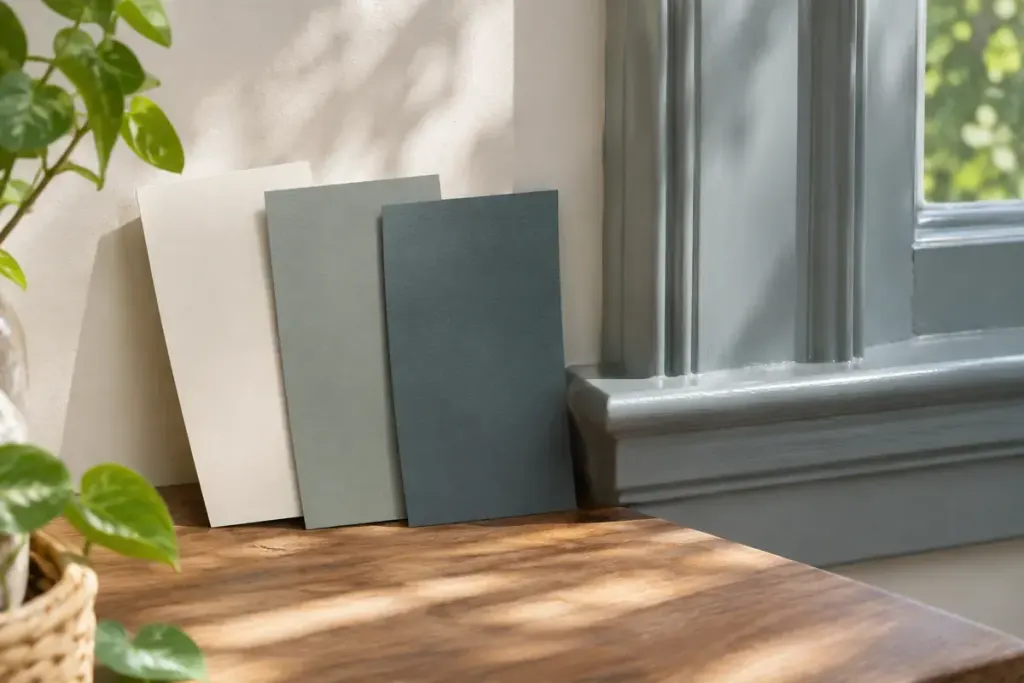
A pale matte wall and a dark glossy door can both look bright in a photograph for different reasons. The colour’s light reflectance value and the finish’s sheen are not the same specification.
Benjamin Moore’s discussion of white paints describes a high light reflectance value, or LRV, as reflecting more light. It is useful when comparing colours, but it does not tell you everything about how a painted surface will look in a particular room.
Keep colour data beside the finish choice
When collecting samples, note the colour name, code, published LRV and proposed finish separately. Do not copy only the colour name and assume that a sample pot, wall paint and trim product will all produce an identical appearance.
Sheen affects the way a surface catches light, while the room’s illumination and surrounding materials affect what you perceive. A high-LRV colour does not create light in a poorly lit room, and a glossy finish does not make a dark colour equivalent to a pale one.
Test the comparison under the conditions that matter
Place suitable sample boards near the surfaces you plan to paint. View them in daylight and under the lamps used in the evening. Keep the samples large enough to compare and avoid judging them only against a bright white screen.
If two candidates have similar published values, look for differences in undertone and their relationship with flooring, cabinetry and textiles. The number is a comparison aid, not a complete description of colour harmony or a guarantee that the room will feel a certain way.
For applications with specific product or building requirements, ask the manufacturer or appropriate professional which limits apply. Do not transfer an LRV recommendation for an exterior material into an unrelated interior decision.
A useful final specification contains the exact colour, product and sheen. The sample test then checks that complete choice in the room, instead of asking one number to make the decorating decision by itself.