
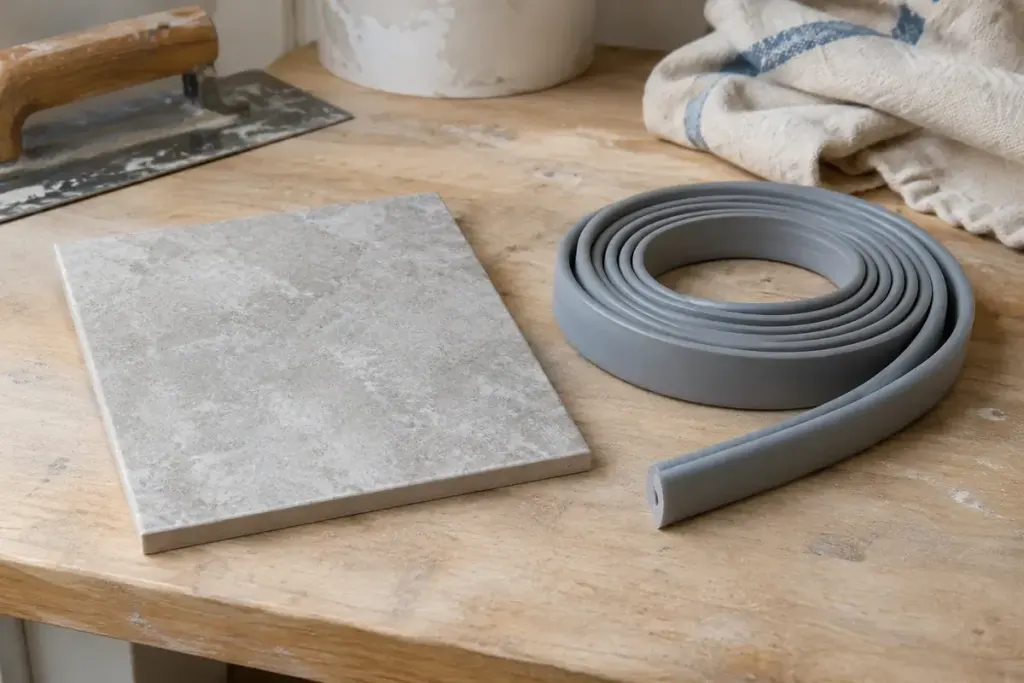
The narrow gap beside a tiled floor can look unfinished when the room is nearly complete. Filling it rigidly may seem like the final tidy step. Yet that space can be part of the floor’s movement design, and closing it incorrectly can create stress rather than improve the finish.
A tiled assembly responds to changes in temperature, moisture and its supporting structure. Movement joints provide planned places for that movement. Schluter’s installation handbook discusses joints at perimeters, restraining structures and within the tile field. The exact arrangement depends on the assembly and conditions.
Ask where movement is accommodated
Before installation, ask the tiler to identify the perimeter joints, changes of plane, relevant substrate joints and any field joints. A large sunny room, a heated floor and a small internal room may not call for the same layout. Use the specified system and applicable standards rather than a universal spacing rule from a short online guide.
Include the finishing trades in the conversation. Skirting, cabinetry and door thresholds can affect what remains visible and whether the intended movement space is preserved. A good-looking trim should not accidentally bridge a joint that was meant to remain flexible.
A practical handover note can record three things: the joint locations, the product or profile used, and any maintenance requirements. Keep this with spare-tile and grout information so a later repair does not erase the original design.
Distinguish the visible line from its function
Ordinary grout between tiles and a designed movement joint do different jobs. Matching their colours may make the distinction difficult to see, but it does not make the materials interchangeable. Nor does a flexible-looking surface repair prove that the underlying assembly has been designed correctly.
If cracks or lifting appear, photograph the pattern and contact a qualified installer or building professional. Do not assume that cutting a new gap or applying sealant will solve an unknown structural or installation problem.
For a renovation quote, ask for the movement-joint approach to be included before work begins. That is a more useful comparison than choosing only by tile price and a promise of “minimal grout lines.”
The most durable-looking room is not always the one with every line made invisible. Some carefully planned gaps are doing essential work, and their purpose should survive the final decorating pass.