
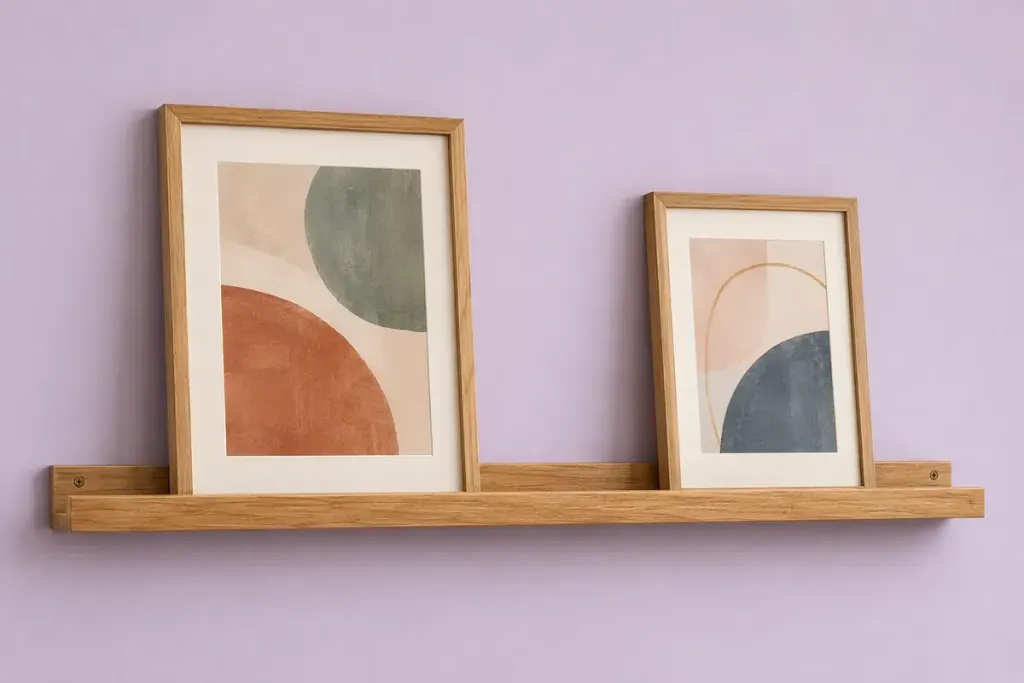
A picture ledge is appealing because changing the display does not require a new hole for every frame. The shallow shelf supports the objects while a raised front edge helps locate them. That convenience still depends on choosing frames that fit and fixing the ledge to a suitable wall.
Before buying, place the proposed frames together on a table. Measure their depth, including any folded stand or protruding hardware. Think about the lean as well as the width: a deep frame can consume a surprising amount of a narrow shelf.
Read the limit for the actual product
The MOSSLANDA assembly instructions are an example of product-specific guidance showing mounting and load information. Use the instructions for the exact ledge you have, including the wall-fastener requirements. A similar-looking shelf or a different length may have a different limit.
Weigh the intended display if it contains heavy frames or objects. Include everything that will sit on the ledge, rather than treating each item’s weight separately. The wall material and fixings also need to be appropriate; the front lip does not compensate for an insecure installation.
Choose a position that works when people use the room
Test the proposed height with removable marks before drilling. View it while sitting, walking through the room and opening nearby doors. Avoid placing an unstable arrangement where a fall could land on someone, and consider children, pets and vibration when deciding what can safely lean.
A useful first arrangement is deliberately simple: one main frame, a smaller companion and enough space to see their edges. Photograph it, then move one item at a time. This makes it easier to tell whether a change improves the balance without continually lifting every object.
If the display grows, check the total load again. The ease of adding another frame is exactly why a ledge can quietly become overloaded. Keep the installation information with your household records so future rearrangements begin with the same limits as the original display.