
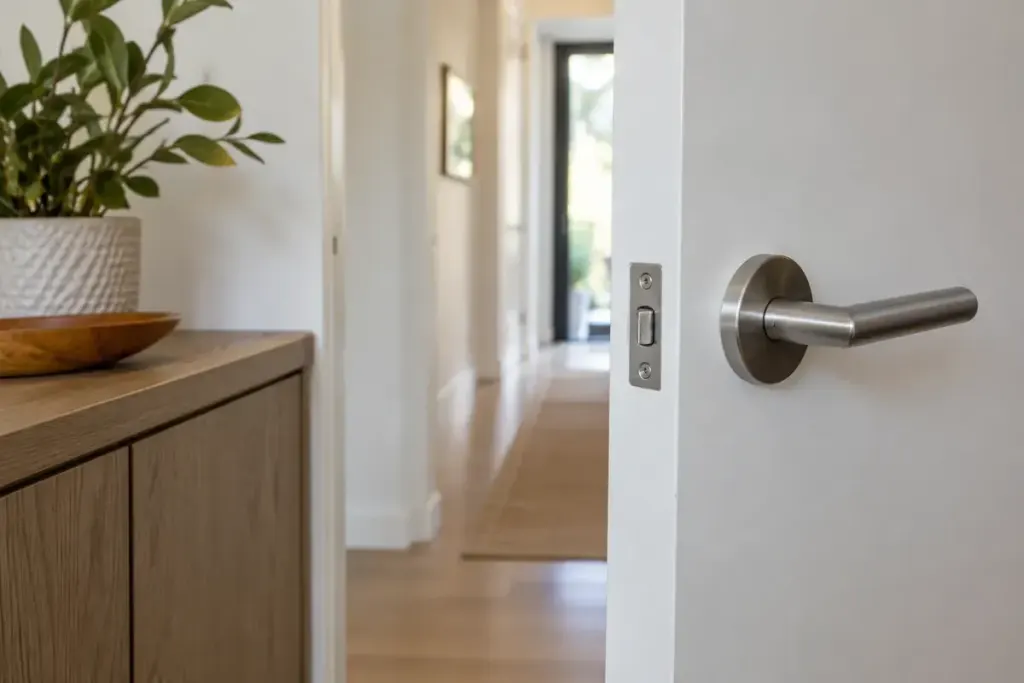
The new handle looks perfect in the catalogue. In the room, it strikes a cupboard before the door opens far enough to pass comfortably. The finish was right; the movement was never tested.
Before ordering, look at the door as something that travels through space. A handle projects beyond the leaf, and nearby furniture or another door may meet it before the edge of the door reaches its apparent limit.
Trace the real movement
With the existing door safely supported and in normal use, observe its full swing. Note where the handle approaches a wall, cabinet, curtain or adjacent door. Include furniture you intend to add, not only what occupies the room today.
A paper template or carefully positioned removable marker can help you imagine a proposed projection without drilling anything. Keep the exercise clear of the hinge and do not place fingers in pinch points.
Check the practical opening: can a person carrying a laundry basket pass, and can drawers or cupboards still open? A layout that works only when every other door is closed may become irritating in daily use.
Check compatibility separately from appearance
Confirm the door thickness, existing preparation, latch or lock compatibility and the manufacturer’s fitting requirements. A decorative match is not evidence that the mechanism fits. Where fire, security or accessibility requirements apply, use qualified advice and approved compatible hardware.
Do not trim or modify a fire-rated door or its hardware casually to solve a collision. The appropriate remedy may involve the layout or a professional specification rather than a smaller handle chosen by guesswork.
Consider how the room is used
Try the grip with the people who regularly use the room, where possible. Think about carrying items, limited hand movement and whether clothing or bags may catch on the shape. A showroom touch test is helpful, but the surrounding space still matters.
Record the measurements and take a photograph of the existing fittings before shopping. The useful purchase decision combines appearance, compatibility and movement. A handle earns its place when it opens the room comfortably, not merely when it looks good on a closed door.