
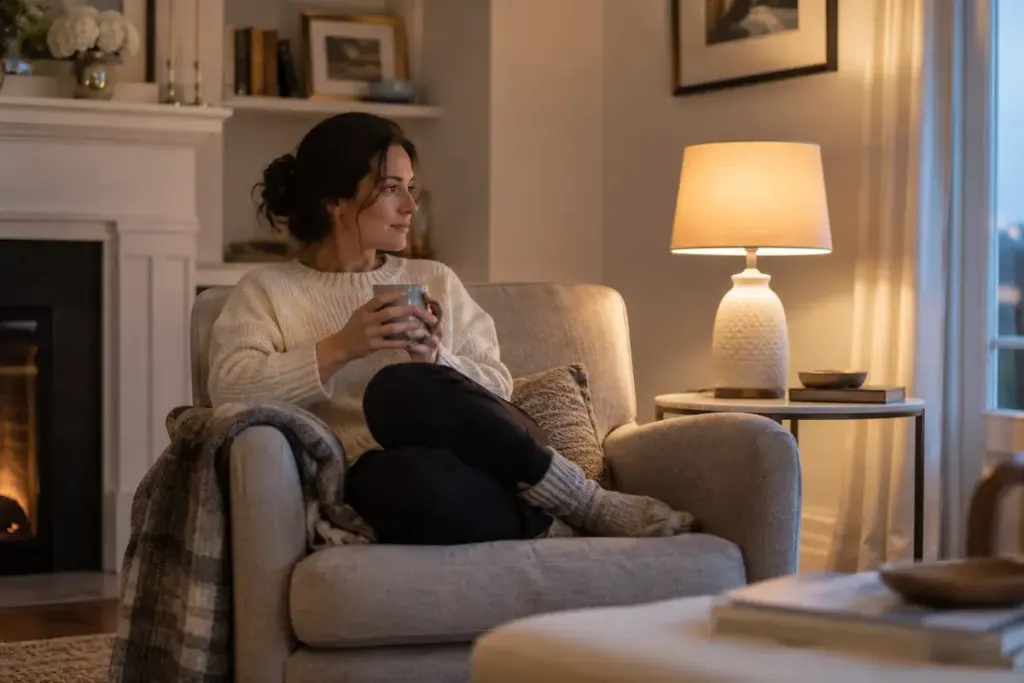
A lampshade can look beautifully proportioned on a shop shelf and expose the bulb the moment you sit beside it at home. The useful test happens from the seat where the lamp will be used, with the actual base and a compatible bulb.
Begin with the fitting. Check that the shade is intended for the lamp’s attachment type, orientation and required clearances. Follow the lamp and shade manufacturer’s limits for bulb type and wattage. A decorative fit is not enough if the components are incompatible.
Try the seated view
Place the lamp where it is meant to live and sit normally. Can you see the bright bulb beneath the shade? Does the shade block the useful light from your book? Is the switch reachable without leaning awkwardly?
Then stand and view it from the room’s entrance. Those two positions may reveal different problems. You are choosing a working object for a space, not only a silhouette for one photograph.
Shade material changes the result. A more opaque shade directs light differently from a translucent fabric, while a coloured lining can affect the apparent warmth. Test in the evening as well as daylight; the room’s other light sources influence what feels comfortable.
Change one component at a time
If the corner feels dim, decide whether the problem is light output, direction or placement before buying a larger shade. Increasing bulb power beyond the fitting’s rating is not a solution. A separate suitable task light may serve reading better than asking a decorative lamp to do everything.
Take measurements and photographs of the existing base and attachment when shopping. Check return conditions before treating a new shade as a home trial. Keep cords clear of walking routes and ensure the lamp remains stable with the chosen shade.
The right choice is the one that looks settled in the room and lets you use the chair comfortably. If you can forget about the glare and concentrate on the page, the proportions are doing more than looking good.