
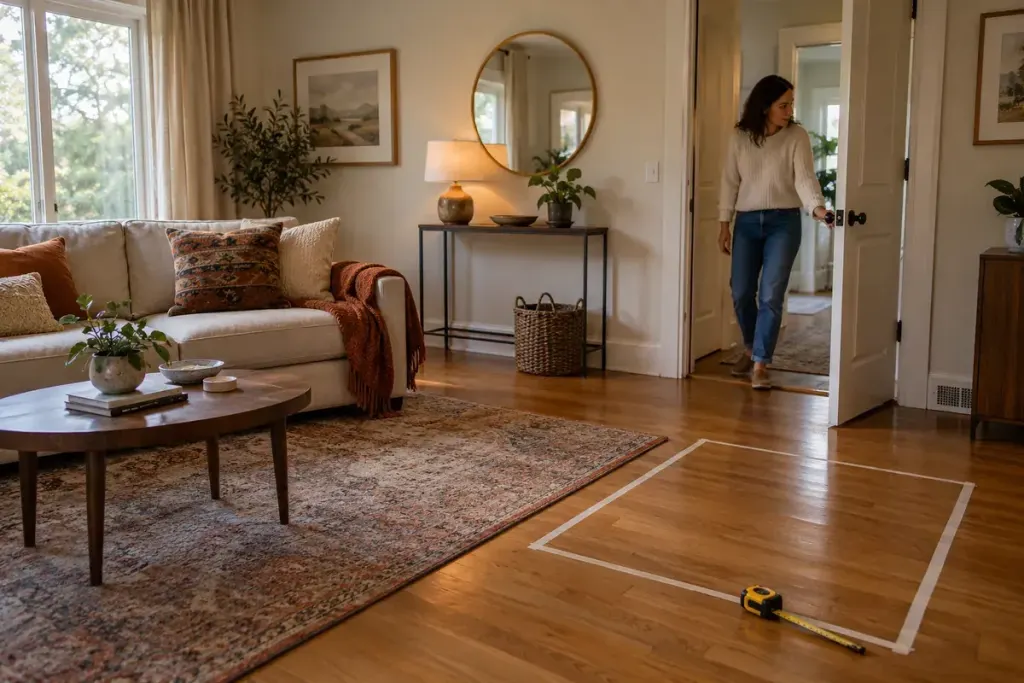
The armchair fits between the sofa and the wall on paper. In daily use, the drawer cannot open and everyone turns sideways to reach the window. The furniture fits; the activity around it does not.
A simple layout test helps you see that difference before ordering. You do not need a polished floor plan. A measured sketch, a few movable markers and a walk through normal routines can expose a problem while it is still easy to change.
Measure the room’s interruptions
Record the usable space, not just the longest wall-to-wall dimension. Mark door swings, window openings, radiators, built-in storage and other fixed features. Note skirting or trim that changes where a piece can sit, and keep ventilation or manufacturer-required clearances in mind.
The IKEA measurement guide shows why obstacles belong on a room sketch. Pipes, columns and switches can affect placement even when they seem small compared with the furniture. The guide is a planning reference, not a substitute for local accessibility or building requirements.
Mark the footprint without damaging the floor
Use paper or another suitable removable marker to indicate the piece’s width and depth. If using tape, first check compatibility on an inconspicuous part of the surface. Avoid leaving a trip hazard in a busy route, and remove the markers after the test.
Check the product’s full operating dimensions. A reclining chair, extending table or drawer unit needs more space when used than when closed. The ordinary product photograph may show only its most compact arrangement.
Try the room as a sequence of actions
Walk from the entrance to the seat, then to the storage or window. Carry a normal everyday object, such as a laundry basket, if that is part of the route. Ask other household members about their needs rather than treating one person’s comfortable movement as universal.
In a fictional living room, moving a side table may make the chair workable. In another, the proposed chair blocks the only practical route. The test should allow either answer. Keep exits clear and seek appropriate advice where mobility access or regulated escape routes are involved.
Check the journey into the home
A piece that works in the room can still be difficult to deliver. Compare the supplier’s package dimensions with doors, halls, stairs and lifts along the route. Ask about assembly, removable parts and delivery restrictions before assuming a tight turn will be manageable.
Do not plan to remove building fixtures or lift heavy furniture without qualified help. Send accurate measurements and photographs to the supplier through its official contact route when you need clarification. Keep their answer with the order details.
Record the version you actually tested
Save the sketch with the product name, dimensions and date. If you switch to a wider model or add a footstool, revisit the test. A remembered fit can easily belong to a different version.
The best arrangement leaves room for the things you do every day. Looking at that space before buying is often more revealing than looking at the furniture alone.
Related reading: The Paint Looked Perfect in the Shop. Test It Where You Will Live With It.