
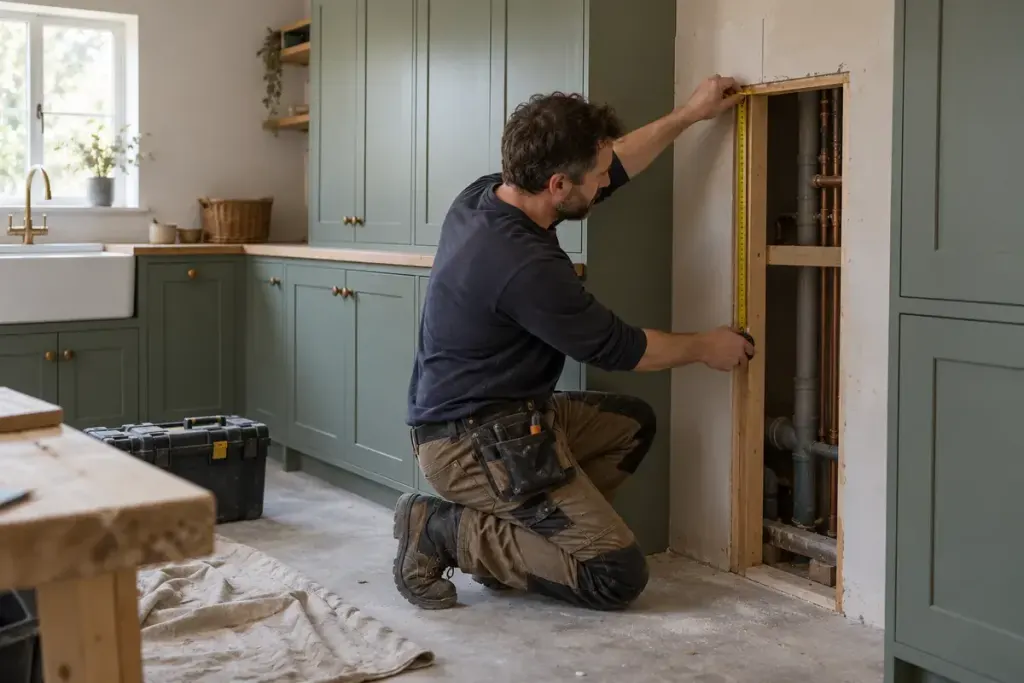
A wall of fitted cabinets can make a room feel calm and complete. It can also hide the valve or access panel someone will need during a repair. Before approving the drawing, identify what sits behind the proposed furniture.
Walk through the space with the relevant installer or qualified tradesperson. Mark electrical panels, plumbing valves, meters, ventilation openings and equipment that needs inspection. Ask about the required access and clearance for each item under the applicable instructions and local rules.
Draw the maintenance task, not just the cabinet
A small opening may let someone see a valve without allowing them to reach it comfortably or replace it. Think about the door swing, tools, removable components and the path needed to bring equipment out. Shelves full of belongings should not be the only thing standing between a technician and an urgent control.
Ask the cabinet maker to show the access solution on the drawing. A removable panel should have an identifiable way to open it without damaging the finish. Do not let a decorative treatment obstruct ventilation or conceal equipment contrary to its installation requirements.
- Photograph the service locations before construction covers them.
- Have qualified trades confirm the access requirements.
- Include those requirements in the approved cabinet design.
- Test access before the installer leaves.
During the final check, open the relevant doors and panels with the room arranged as it will be used. A beautiful handle can still collide with another door. A movable shelf may be impractical if removing it requires dismantling half the unit.
Keep a simple service-location note with the household maintenance records. If a control is hidden behind a panel, label it discreetly and clearly where appropriate.
The aim is furniture that remains useful for years. Planning for maintenance early is usually less disruptive than cutting into a finished cabinet when a repair finally makes the missing access obvious.