
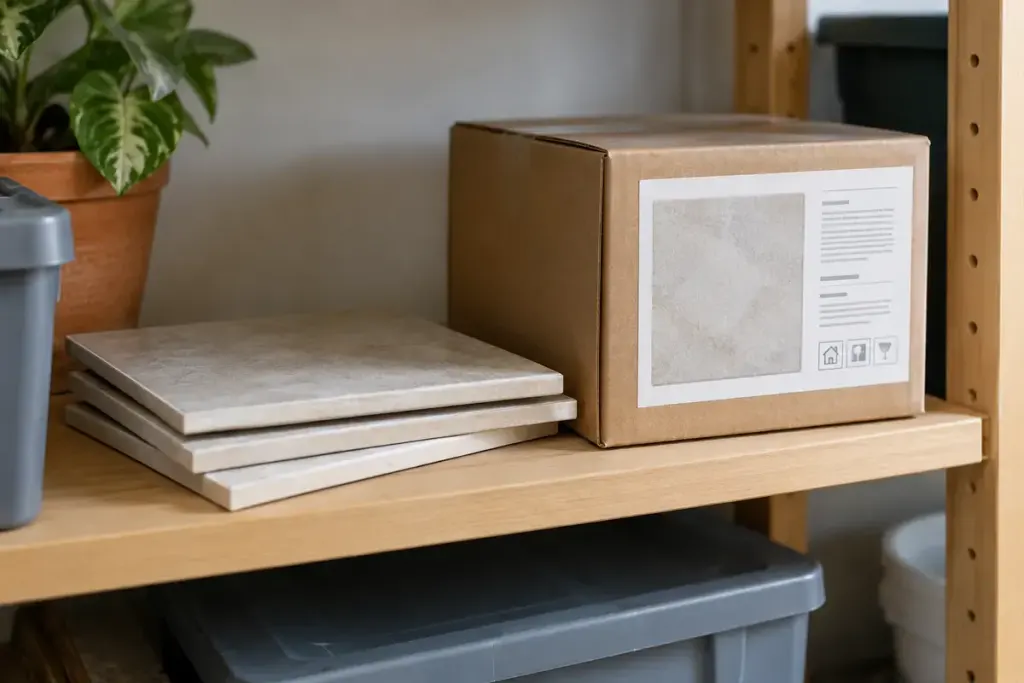
A few spare tiles can be valuable years after a renovation, but only if you know which room they belong to and what they are. A loose stack in the garage quickly loses the information that made it useful.
Before the packaging is discarded, photograph the product label and keep a readable copy with the remaining tiles. Record the manufacturer, range, colour, size and any batch, shade or calibre information shown. Do not assume the range name alone identifies an exact match.
Connect the material to the room
Add a simple note such as “kitchen splashback, installed October 2026.” If several similar tiles were used, distinguish floor, wall and decorative pieces. Record the supplier and purchase reference in the renovation file, where they can be found without moving a heavy box.
Keep pieces protected from impact and store them according to the manufacturer’s guidance. Choose a stable location where the weight is supported and the tiles will not fall when another item is removed. Avoid balancing a few leftovers loosely on a high shelf.
Preserve full usable tiles separately from small cut-offs. A fragment can help identify a colour, but it may not be suitable for replacing a damaged tile. Mark the quantity honestly so a future repair is not planned around unusable pieces.
Do not promise an invisible repair
Even an original spare may look different beside tiles exposed to years of use, staining or light. A later purchase from the same range may also differ. Before a repair, compare the material in the actual room and discuss the expected result with the installer.
Keep grout information too, but follow storage and shelf-life guidance for any leftover product. An old bag should not be treated as usable merely because its colour name matches.
The most useful spare-tile store is a small material archive: identifiable pieces, a clear location and enough documentation to help the next person make a sensible repair decision.