
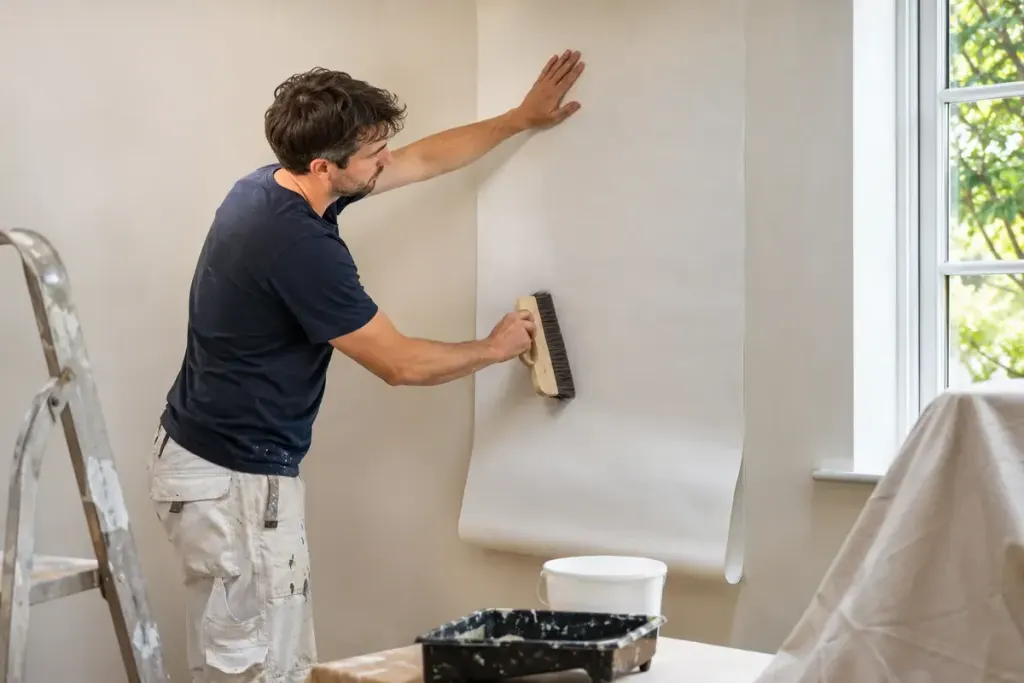
Lining paper sits between the wall and the decorative finish. It can help create a more even base for painting or wallpaper, but choosing a thicker paper does not remove the need to understand the surface underneath.
Erfurt MAV describes its lining paper as a base for further wallcoverings or emulsion paint. The product and grade need to suit the intended finish; “lining paper” is a category, not one identical material with one installation method.
Separate surface preparation from repair
Before measuring rolls, inspect the wall for loose material, damp and defects that need attention. A covering can conceal a symptom while leaving its cause in place. If plaster is unstable or moisture is recurring, establish and address the cause before decorating over it.
For an ordinary sound wall, follow the chosen product’s instructions for cleaning, preparation, adhesive and application. A paper-backed liner and a nonwoven liner may require different handling. Do not transfer a familiar soaking or pasting routine to a new product without checking.
A small trial area can help you judge the proposed finish, especially where lighting from a window makes surface irregularities visible. Let the materials complete the specified drying stages before deciding how the painted or wallpapered result looks.
Plan the joins and the next layer
Ask how the liner’s joins should relate to those of the final wallpaper. Record the roll specification and adhesive so you can repeat the setup if more material is needed. A vague note such as “heavy lining paper” is not enough to identify a matching product later.
The technical sheet for ERFURT Makulatur 95 PRO is an example of why product-specific instructions matter: it describes a particular separable lining system and its subsequent covering.
The useful decision is therefore a sequence: assess the wall, choose the finish, select a compatible liner and adhesive, then follow the installation and drying requirements. Lining paper can improve a decorating base; it should not be asked to perform the job of a building repair.