
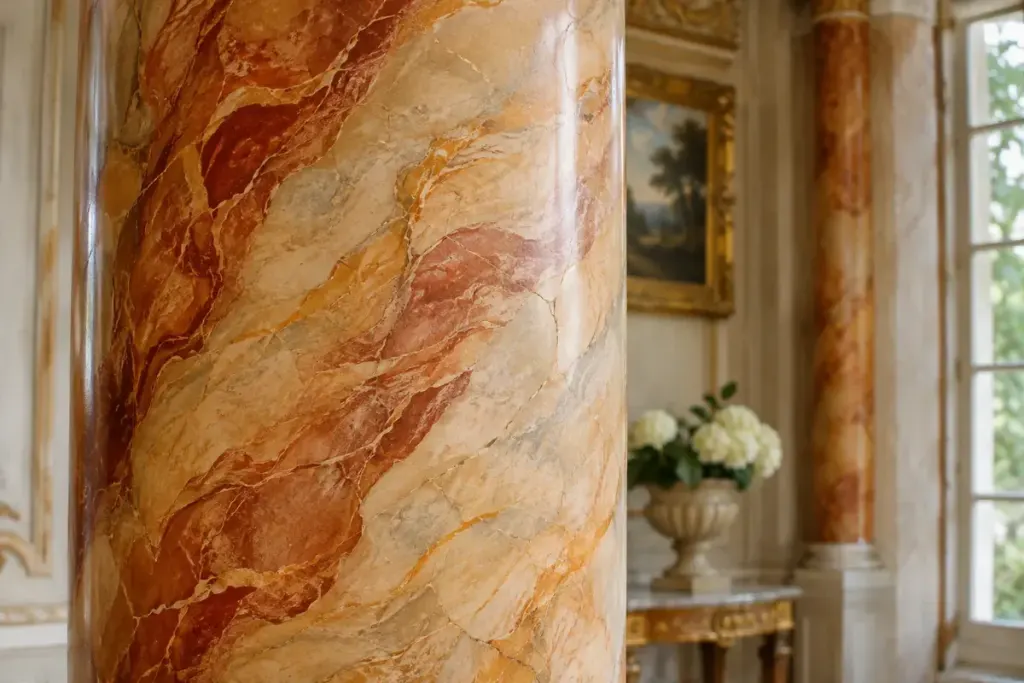
A veined tabletop or column may resemble marble while belonging to a different material tradition. Scagliola is a decorative craft that creates stone-like effects using a gypsum-based mixture, pigments and binders. Its interest lies as much in the making as in the resemblance.
The V&A’s film about scagliola follows a specialist Florentine workshop recreating part of a historic table. It shows how mixing, arranging and finishing coloured material can build the effect rather than relying on a naturally quarried pattern.
Choose the material, not just the photograph
In a renovation conversation, begin by confirming what the proposed product actually is. A scagliola surface, a painted marble effect, a printed laminate and natural stone may share a visual reference while requiring different construction and care.
Ask the maker for a physical sample and a description of the complete assembly. What supports the decorative layer? How will edges be finished? What joints will be visible? A close photograph of attractive veining does not answer those questions.
Look at the sample beside the intended wall colour and under the room’s lighting. A highly patterned surface may be beautiful in isolation yet compete with another strong material nearby. Leave time to compare the whole composition.
Match the specification to the job
A decorative panel and a frequently used work surface face different demands. Ask for written guidance about the intended location, exposure to moisture or heat, cleaning and any protective finish. Do not transfer a natural-marble care routine to a different material simply because both look similar.
If the proposal involves an existing historic feature, identification comes before cleaning or repair. An abrasive or chemical treatment chosen on the assumption that the surface is solid stone could be inappropriate. A conservator or suitably experienced specialist can establish what is present and what intervention is justified.
Keep the sample with the specification
Record the approved appearance, edge detail, maker’s description and care instructions together. Handcrafted variation should be discussed before approval: which differences are expected, and which would indicate a departure from the agreed finish?
Scagliola can be appreciated as its own craft rather than judged only by whether it fools someone into seeing marble. For a successful interior, the appearance, construction and everyday use all need to belong to the same decision.