
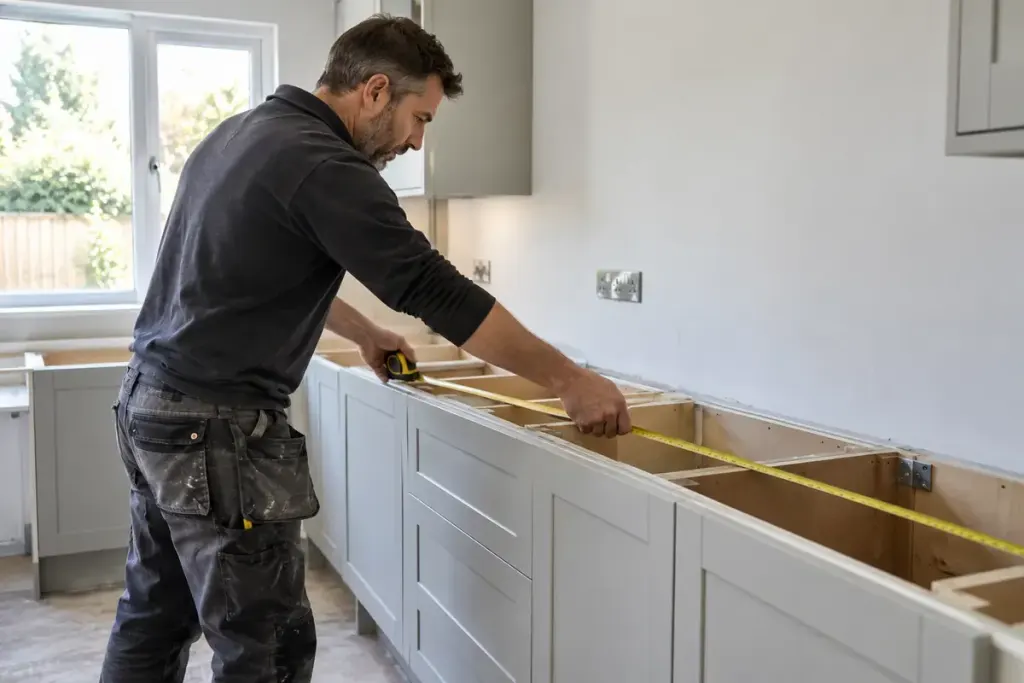
A worktop template records a kitchen at a particular moment. If a cabinet moves afterwards, the carefully measured slab may no longer match the installation. The templating appointment is therefore a milestone that depends on earlier decisions being genuinely settled.
Ask the fabricator for its readiness checklist before booking. Requirements differ by material, system and installer. Manufacturer guidance, such as Cosentino’s installation manual, highlights the importance of level, adequately supported base units. The professional responsible for your installation must confirm the applicable details.
Resolve the decisions that change a cut
Confirm the final cabinet positions and the exact sink, hob and tap models. A placeholder product name is not a reliable substitute for the required dimensions or physical item where the fabricator asks for it. Discuss overhangs, visible edges, joints and any splashback arrangement.
Check who is responsible for each decision. The homeowner may choose an edge style, while the fabricator determines what is technically feasible and the installer verifies support. A drawing should not silently turn an unanswered question into an approved instruction.
Keep later changes visible
After the template, pause before moving a base unit, changing an appliance or adding a panel. Tell the fabricator exactly what changed and ask whether a new measurement or drawing approval is needed. Do not assume a small movement is harmless because it looks minor on site.
A useful project note records the template date, drawing revision, approved appliance models and the person authorised to confirm fabrication. Keep any later amendment beside that record.
Also confirm the access route and installation-day responsibilities. The measuring visit, fabrication and final fitting are separate stages. Treating the template as a controlled handover between them helps the team catch a change while it is still a conversation, rather than after a heavy finished worktop arrives.