
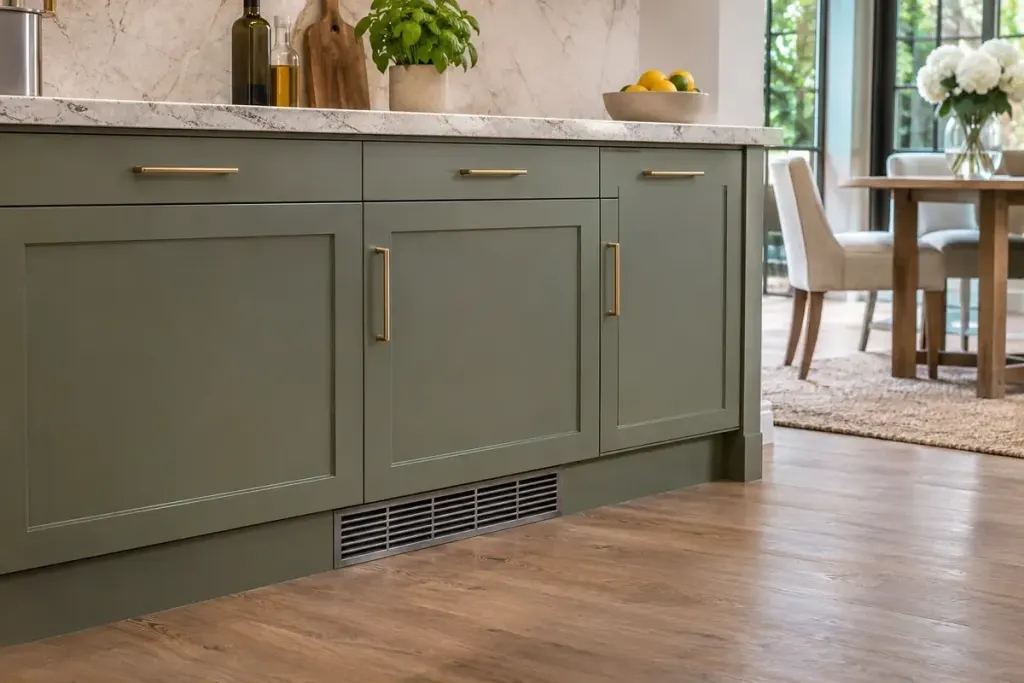
A plinth heater can preserve wall space by fitting at the base of kitchen units. That location also puts it close to rugs, stored trays, pet bowls and cleaning equipment. A tidy-looking cabinet drawing needs to leave the heater’s working space intact.
Start with the instructions for the exact model. For example, Dimplex’s BFHE instructions address installation and keeping air openings unobstructed. Those requirements belong to that product; they are not universal measurements for every electric or water-fed plinth heater.
Put the grille on the room plan
Mark the heater’s position and the clearance specified by its manufacturer. Then draw the items likely to sit nearby in ordinary use. A floor runner added after the renovation can create a conflict that was absent from the original drawing.
Ask how the unit will be accessed for the maintenance described in its manual. A permanently fixed decorative panel should not quietly remove the access that the installer expected. Coordinate the joinery and heating details before the cabinet finish is approved.
Also identify the heater type. An electric model and a hydronic unit connected to a heating circuit can require different services and controls. A photograph of a grille does not establish which arrangement is behind it.
Give the installer a real-use brief
Explain how the kitchen will be used, including nearby seating, storage and cleaning routines. Ask the qualified installer to confirm suitability, required services and compliance with applicable local requirements. Do not improvise wiring, pipework or ventilation openings from a generic online example.
Keep the model number, manual and installation record with the renovation documents. Photograph the finished location so future changes to flooring or cabinets can be checked against the original arrangement.
The useful design question is not only whether the heater fits behind the plinth. It is whether air can move as intended and the unit can be cared for after the kitchen is filled with the objects of everyday life.