
The joint looks neat, but the new paint beads or peels over it. The problem may be the product beneath the paint rather than your brushwork. Sealants differ in whether they can accept a painted finish.
Read the label before the colour chart
Look for the manufacturer’s statement on paintability, suitable surfaces and intended location. Do not assume that every product sold for gaps around a home can be painted. Some silicone products are not designed to accept ordinary paint, while other products have specific compatible coating instructions.
Choose the product for the joint’s job first. Movement, moisture exposure and substrate compatibility still matter. A paintable product is not automatically suitable for a wet-area joint that requires a different specification.
Distinguish dry-looking from ready
Follow the stated curing and overpainting times, including the conditions that affect them. A surface that no longer feels wet may not be ready for the next coating. Thick application, temperature and humidity can change the process.
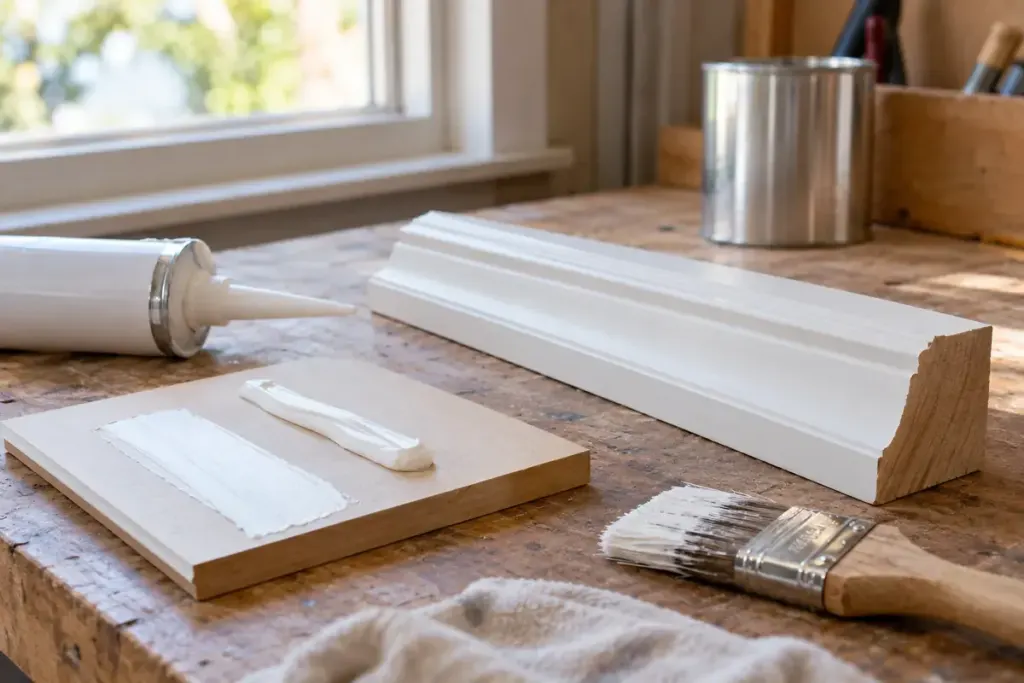
For an invented trim project, the painter tests the chosen sealant and paint on an offcut, waits as instructed and checks adhesion. That small trial is more useful than discovering incompatibility along an entire finished room.
Investigate an existing joint
If the old product is unknown, do not simply add another layer and hope it behaves like the new one. Ask the manufacturer or a qualified tradesperson about identification, removal and preparation. Damaged or unsuitable material may need proper replacement before painting.
Keep ventilation and product-safety instructions in view. Avoid sanding or disturbing unknown older building materials without considering what they may contain. The right preparation depends on the surface and the property’s history.
Keep a small record
Save the product name, batch information if useful, colour and application date with the renovation notes. A future repair is easier when you know what is beneath the paint.
A tidy painted joint starts with compatibility and timing. The final colour is only the visible layer of a decision made before the tube was opened.