
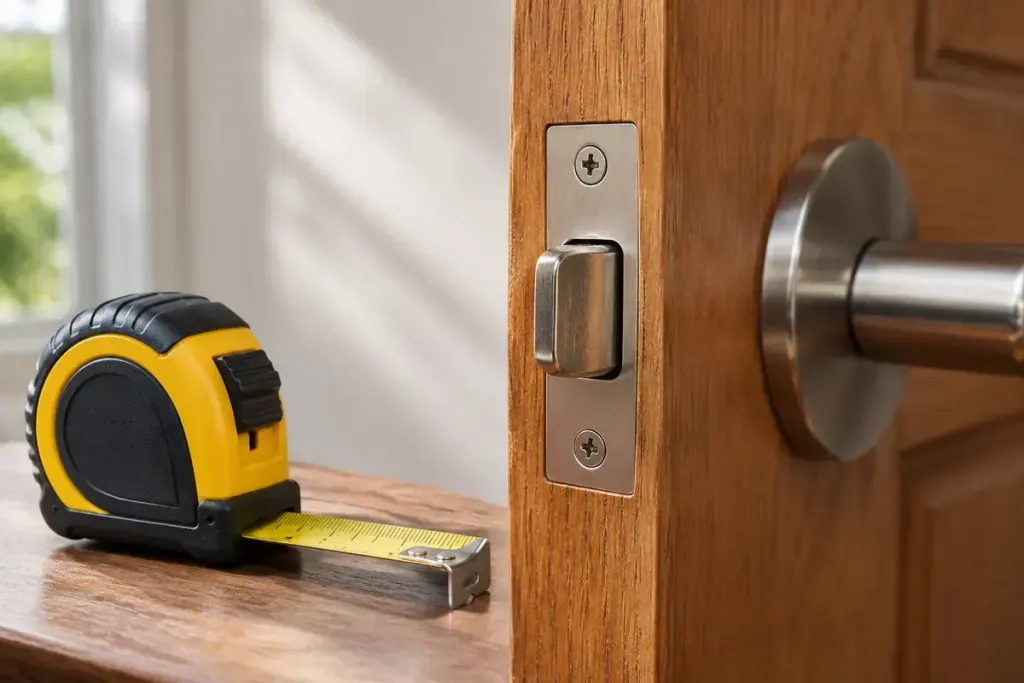
A replacement handle can look right in the shop and still fail to line up with the holes in the door. Backset is one of the measurements that explains why.
For the cylindrical lock preparation shown in Yale’s installation instructions, backset is measured from the door edge to the centre of the main hole. The instructions show an adjustable latch for specified positions. That is a product-specific arrangement, not a promise that every latch adjusts to fit any door.
Measure to the centre, not the visible edge of the handle
A decorative rose or plate can be larger than the opening behind it. Measuring to its nearest edge gives a different number. Use the relevant manufacturer’s drawing to identify the centreline and the correct door edge reference, especially where the edge is bevelled or the lock type differs.
Make a small sketch with separate labels for backset, door thickness, bore dimensions and any required spacing between openings. Keep the units consistent. A photograph with a tape measure can supplement the sketch, but perspective makes it a poor substitute for a careful reading.
Suppose two handles both have a round rose and the same finish. One might fit the existing backset while the other needs a different preparation. Choosing by appearance first can create avoidable drilling or return costs. Confirm the fitting requirements before treating the finish as the final decision.
Check the whole hardware combination
Schlage’s example installation sheet shows several door-preparation dimensions together. Backset is only one of them. Door handing, latch faceplate, strike position and clearance can also affect a particular installation.
For a fire-rated, communal or security-critical door, consult the responsible professional before changing hardware or enlarging holes. The replacement needs to suit the door assembly and its requirements, not merely cover the old marks.
A few labelled measurements taken before ordering can save much more time than a rushed adjustment after the old lock has been removed.