
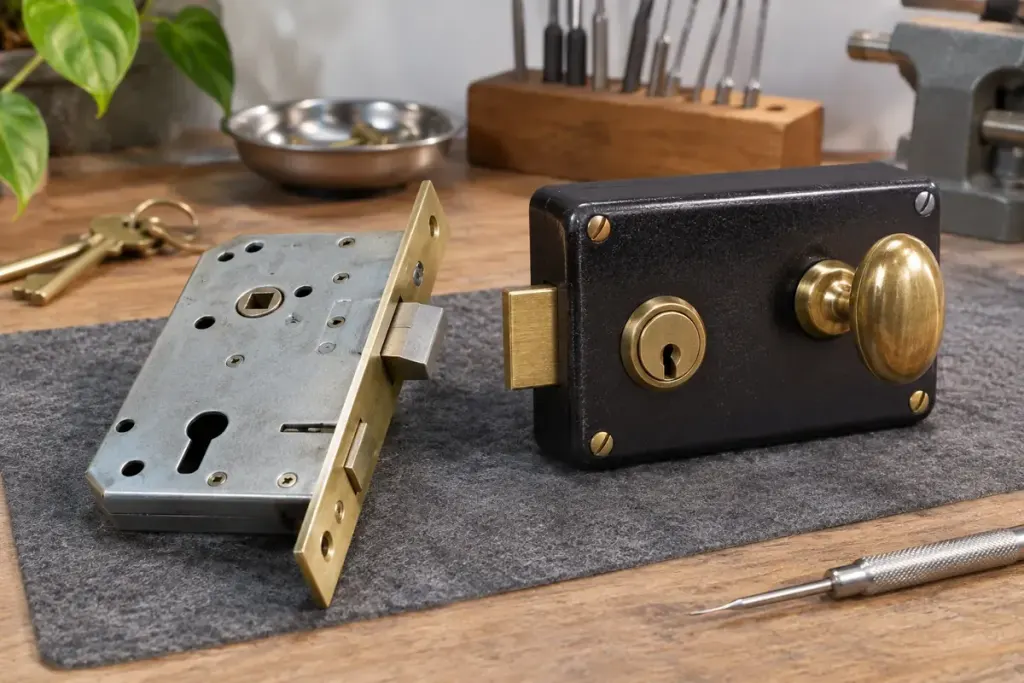
Two door locks can have similar-looking keys while occupying very different parts of the door. Before ordering replacement hardware, identify where the lock body sits. That basic distinction affects the work needed and the information a locksmith will ask for.
The ASSA ABLOY hardware glossary defines a mortise lock as a lock recessed into the door edge. A rim arrangement is mounted on the door’s surface. The terms describe construction and location, rather than providing a security rating on their own.
Look at the door edge as well as the room face
A mortise lock’s case is housed within an opening in the door. Its faceplate is visible at the edge. A rim lock presents more of its body on the face of the door. Handles, cylinders and decorative covers can distract from that difference in a product photograph.
For a renovation enquiry, take clear photographs of the existing hardware, door edge and surrounding frame where you are authorised to do so. Keep any manufacturer identification. Do not dismantle a working lock simply to obtain a better picture.
Replacement requires more than matching the finish
Ask the professional to check the door material, thickness, existing preparation, operation and frame compatibility. A polished brass finish says nothing about whether the case will fit the opening already present.
Also explain the door’s role. An internal room door, an external entrance and a door within an escape route can raise different requirements. Fire-rated doors and shared-building entrances need appropriate assessment before hardware changes.
Agree the intended operation
Describe who uses the door and how it should work from each side. Discuss accessibility, authorised access and emergency exit requirements with the qualified installer. Avoid choosing hardware from a photograph and leaving those questions until installation day.
Keep the agreed product details and any supplied instructions with the renovation record. If future maintenance is needed, an exact model and installation reference are more useful than “the silver lock.”
Recognising mortise and rim construction will not make you a locksmith, but it gives the first conversation a clear starting point: what is fitted now, what function is required, and what changes the door can appropriately accommodate.