
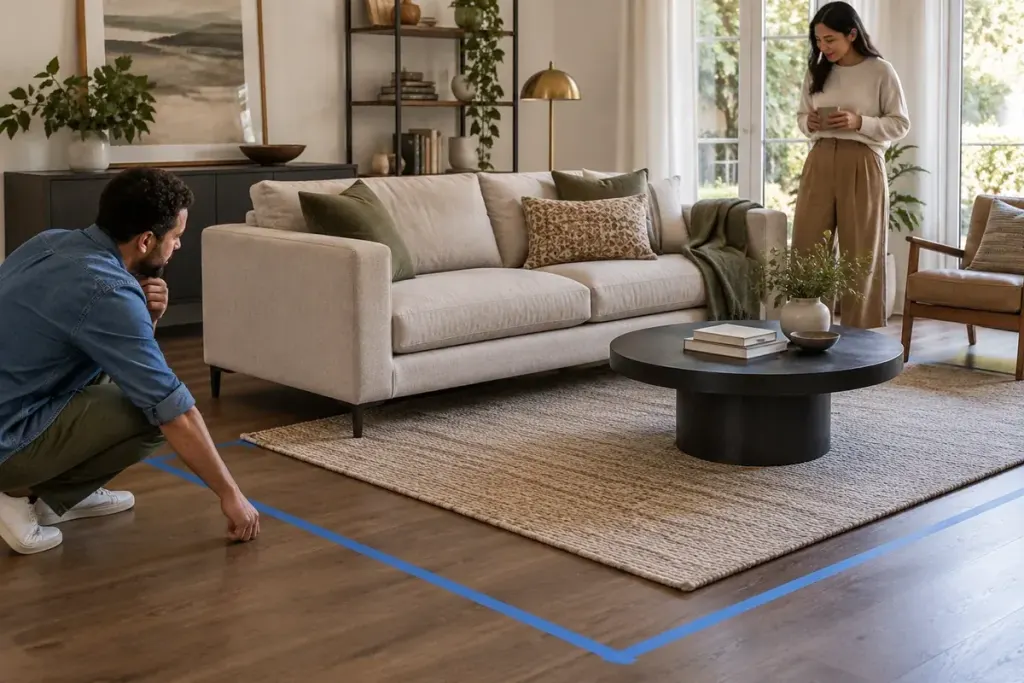
A rug can fit inside a room and still feel unrelated to the furniture. The useful measurement is not simply the empty rectangle of floor; it is the area the seating arrangement occupies when people use it.
Mark two realistic sizes
Use an appropriate removable marker on a floor that tolerates it, or lay out sheets of paper. Test the boundary with the sofa and chairs in their actual positions. One option might include the front legs of the seating; another might hold all the furniture. These are arrangements to compare, not universal rules.
Sit down, move a chair and walk through the room. Does a rug edge fall where a chair leg catches as you stand? Does a frequently used route cross a raised corner? Check doors and low furniture too, including the extra thickness of any underlay.
For a dining area, pull chairs out as if someone were leaving the table. A rug that fits the table alone may leave the rear chair legs repeatedly dropping off its edge. Measure that used space before deciding whether a rug is practical there at all.
Then consider the material
Think about cleaning, pets, spills and the flooring underneath. Check the rug and underlay manufacturer’s compatibility guidance; an unsuitable backing can affect some floor finishes. Use a suitable non-slip arrangement where needed and keep edges flat.
Take a photo of each tested size from the room entrance. Looking at the alternatives later can reveal that the smaller option saves money but makes the seating look disconnected, or that the larger one crowds a walkway.
Keep the final measurements with a note about the tested layout. If you rearrange the furniture before buying, test again. The right size belongs to a working room, not to a rectangle measured while everything was pushed against the walls.