
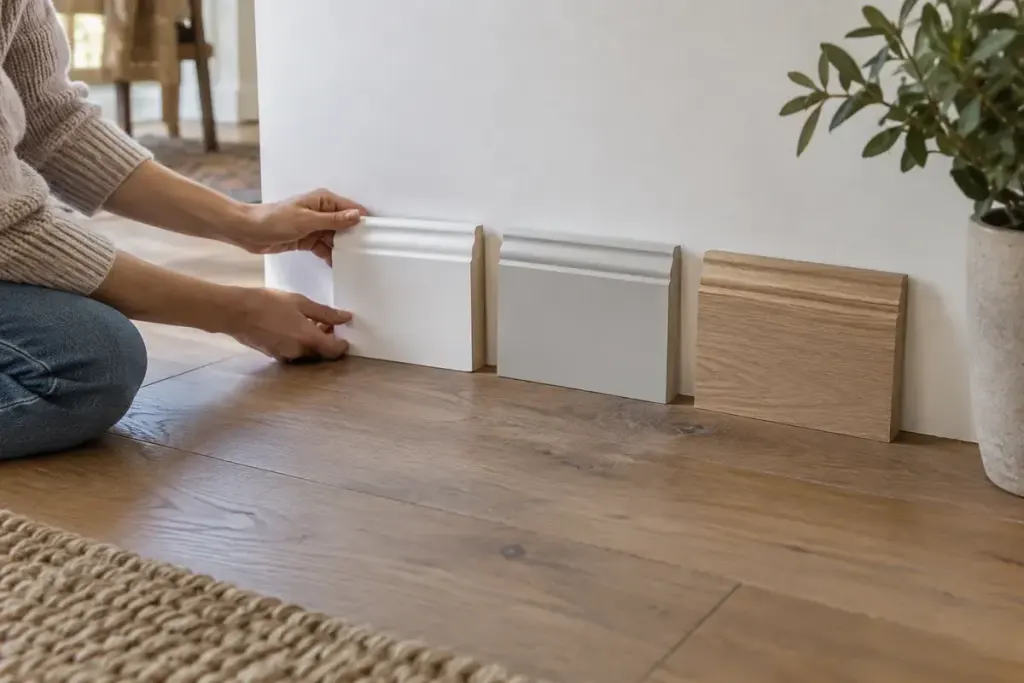
A skirting-board profile can look elegant in isolation and surprisingly heavy beside a low window or narrow door trim. The sample needs to meet the room’s other edges before you decide whether it belongs there.
Stand the sample against the actual floor and wall, using a safe temporary arrangement. View it from the doorway and from the place you normally sit. A close-up on a shop counter does not show how the line will run around an entire room.
Check the junctions
Look where the skirting will meet door architraves, built-in furniture and changes in floor level. A profile that projects beyond adjacent trim may need a deliberate detail. Ask the installer how those junctions will be finished rather than assuming they will disappear during fitting.
Consider the existing wall and floor condition. Gaps and uneven surfaces may affect the work required, but a decorative board is not a repair for an unresolved moisture or structural problem. Investigate underlying defects with an appropriate professional before covering them.
Compare finish as well as height
Place the sample beside the intended wall colour and flooring. Notice whether its sheen makes the edge more prominent. A white sample can look different under warm evening lighting, so check it at more than one time of day.
For a simple comparison, photograph two samples from the same position and distance. Label the photographs with the profile and size. This keeps the decision tied to the actual samples rather than a memory of which one seemed smaller.
Before ordering, confirm lengths, corner treatment, finishing requirements and the allowance for cuts with the installer or supplier. The useful outcome is a coherent edge around the room, including the awkward junctions. Choosing a profile from a sample in context makes those details part of the decision early enough to address them.