
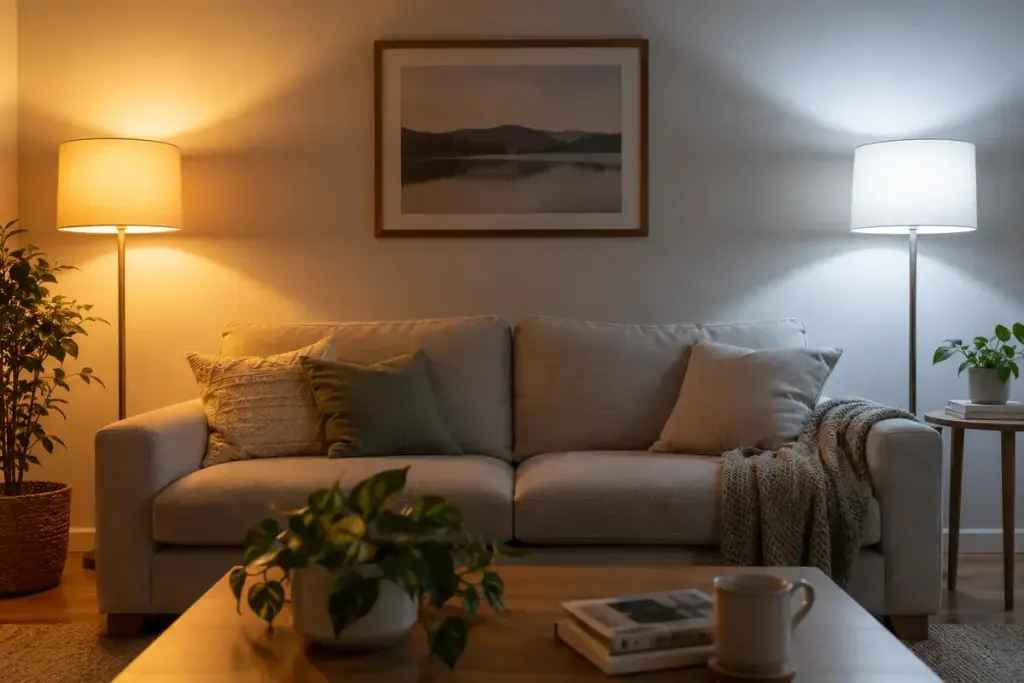
A white wall can appear creamy under one lamp and cooler under another. Before replacing every bulb, test the light in the room where you will use it. A display shelf in a shop cannot reproduce your wall colours, furnishings or evening routine.
The Department of Energy’s light-bulb guidance distinguishes colour temperature from other lamp characteristics. Lower Kelvin values generally describe warmer-looking light; higher values describe cooler-looking light. This is about the appearance of the light, not how physically hot the bulb feels.
Change one variable at a time
Compare suitable bulbs at similar stated brightness where possible. Otherwise you may prefer one because it is brighter rather than because of its colour appearance. Check the fixture’s permitted bulb type, electrical rating and dimmer compatibility before fitting anything.
Test at the time of day that matters. A living room used after dark deserves an evening comparison. A work surface used in mixed daylight may need a separate check. Look at faces, fabrics and the task area, not only the glowing bulb.
Write a room-specific note
Instead of “warm light is better,” record something like “this lamp makes the beige curtains look more yellow, but reading at this chair feels comfortable.” That observation is tied to a location and an activity rather than presented as a rule for every home.
- Keep packaging details so you can identify the tested bulb.
- Compare glare and shadows as well as colour appearance.
- Check whether neighbouring lamps create an unwanted mismatch.
- Use the same shade or diffuser during the comparison.
Do not choose a higher colour temperature merely because the room seems dim; brightness and light distribution may be the real issue. If the fixture or wiring needs alteration, use a qualified professional.
Once you find a useful combination, buy for that room’s needs. Different spaces can reasonably use different lighting without turning the whole home into a single Kelvin specification.