
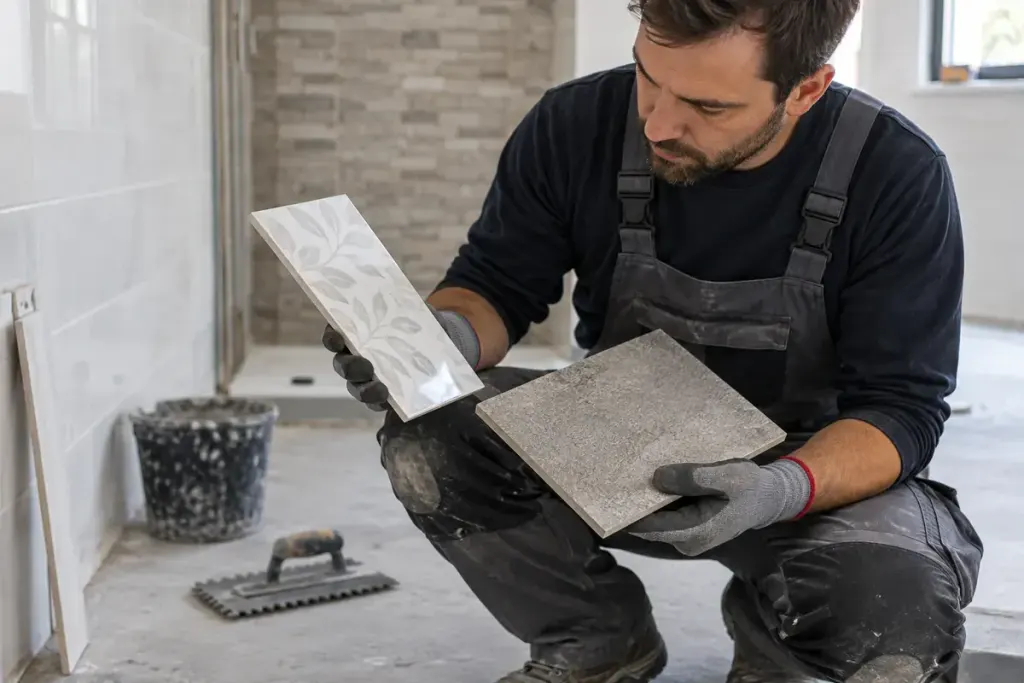
A decorative tile looks perfect for both the shower wall and the floor. Using the same finish might make the room feel coherent, but visual continuity does not establish that the product is suitable underfoot.
Ask for the exact manufacturer’s specification and intended applications. A tile sold for walls should not be assumed to have the required floor performance. Strength, surface behaviour, expected traffic and the conditions of use need checking together.
Describe the room before asking about the tile
Tell the supplier and installer whether the area gets wet, whether people walk barefoot, and whether it is indoors or outdoors. A statement that a tile is “for floors” still leaves questions about the particular environment.
Read any slip-related classification in its stated testing context. Do not convert one number or marketing label into a guarantee that nobody can slip. Cleaning, contamination, footwear and the installed surface also affect use.
The tile is only the top layer
The substrate, waterproofing where required, adhesive, joints and installation method belong in the decision. The Tile Council of North America’s guidance on tiling over existing surfaces stresses the importance of the whole substrate and suitable bonding materials. A compatible-looking surface is not enough.
Have the installer confirm the system before ordering the full quantity. Keep the product code, finish and batch information with the project records. Similar names within one collection can refer to different products.
If the wall tile is unsuitable for the floor, ask for a coordinated floor-rated option rather than improvising a treatment to make it acceptable. Place samples together in the room’s lighting and compare the visual relationship.
A successful room can use related materials without using the identical tile everywhere. Choose the floor for the work it must do, then build the design around that decision.