
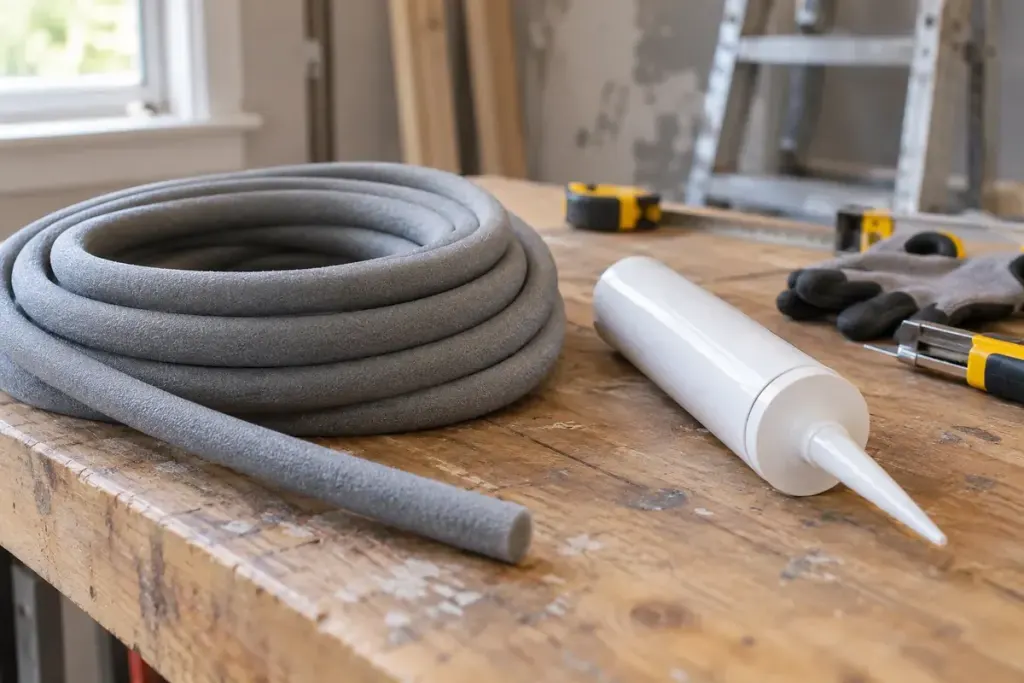
A deep gap is not necessarily improved by filling its entire depth with sealant. Some joint designs use a compressible backer rod behind the sealant to help establish the intended shape and depth. The rod is part of the joint system; it is not the exposed weather seal itself.
Sika’s backer-rod product information describes controlling sealant depth and helping prevent three-sided adhesion. Its technical guidance on sealant joints explains why joint configuration matters. Those principles do not make every foam cord suitable for every gap.
Ask about the joint before the colour
Identify the surfaces, the expected movement and whether the joint is indoors, exposed to weather or part of a specialist assembly. Then check the sealant manufacturer’s requirements for joint width, depth, backing material and preparation. A decorative colour match is useful only after the system is appropriate.
For a contractor’s quotation, ask which sealant and backing product will be used and how the existing failed material will be removed. Record the product names rather than accepting “silicone and foam” as a complete specification. Different sealants and backings have different uses and installation requirements.
Do not substitute scraps of packing foam or force an unsuitable rod into place. Follow the specified sizing and installation method, including any instruction to avoid damaging the backing. The correct depth is determined by the joint design and product guidance, not by whichever space remains after stuffing the gap.
Some gaps need a different repair altogether. Water entering through a failed flashing, a moving structural crack or a fire-rated assembly should not be treated as an ordinary decorative sealing task. Have the underlying condition assessed by the appropriate professional.
When the work is complete, retain the product and preparation details with the renovation record. If the joint later fails, those notes make it easier to investigate the cause instead of repeating the same surface repair without understanding the assembly.